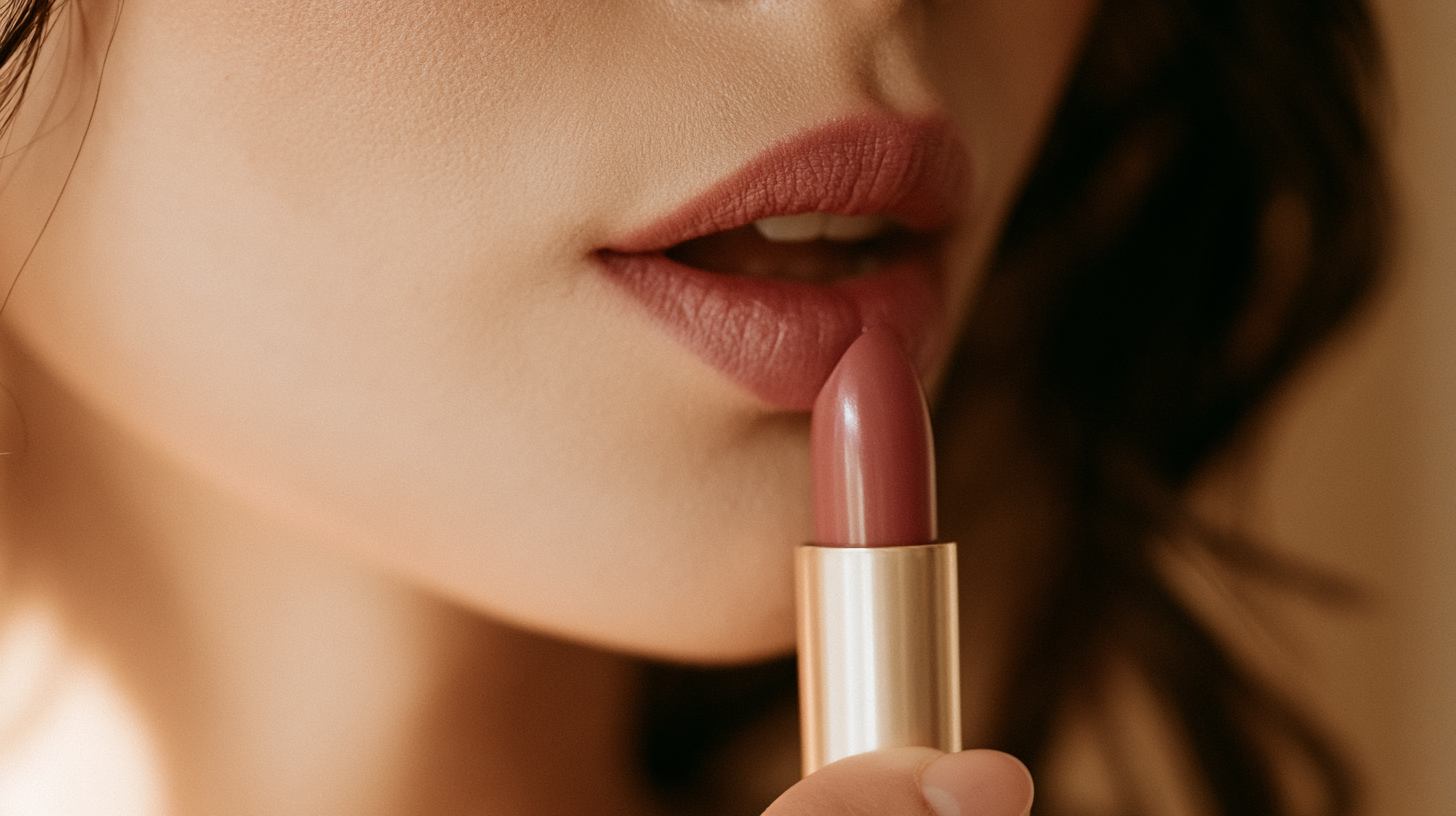
Your Lipstick Contains Microplastics. Here's What to Look For Instead
Introduction:
Most people think carefully about what they eat and drink. Far fewer think about what they apply to their face fifteen times a day.
The average person uses between 5 and 15 personal care and makeup products daily - foundation, concealer, blush, mascara, eyeshadow, lipstick, lip gloss, setting spray. Each one is a separate chemical exposure point applied directly to some of the most absorptive skin on your body. And most of them contain synthetic ingredients that have never been tested for long term safety when used in combination, at this frequency, over a lifetime.
Lipstick is where the problem is most direct. You apply it to your lips. You ingest trace amounts with every application. You reapply throughout the day. Over a year the cumulative exposure is significant - and most people never read the ingredient list.
What's Actually in Conventional Lipstick
A conventional lipstick typically contains a base of waxes, oils, and pigments - and in most cases, synthetic versions of all three.
Petroleum-derived waxes like petrolatum and paraffin are among the most common ingredients in conventional lip products. They're cheap, stable, and effective at creating the texture and finish consumers expect. They're also derived directly from crude oil and carry the contamination profile that comes with it.
Synthetic polymers appear as film-formers and texture agents - polyethylene, nylon-12, and acrylate copolymers are common. These are plastic-derived ingredients applied directly to your lips and ingested in trace amounts throughout the day. A single application is trivial. Daily application over decades is not.
Colorants in conventional lipstick often include synthetic dyes derived from coal tar, some of which have been linked to carcinogenicity in animal studies and are restricted in other countries but permitted in the US.
And then there's fragrance.
The Fragrance Loophole in Cosmetics
In the United States, "fragrance" or "parfum" on any cosmetic ingredient list is a legally protected trade secret. A single word can represent a blend of anywhere from a handful to several hundred individual chemicals - the brand is not required to disclose any of them.
Commonly hidden behind fragrance in cosmetics: phthalates used to make scent last longer, synthetic musks, and volatile organic compounds that absorb through skin and mucous membranes. Phthalates are documented endocrine disruptors - chemicals that mimic or block hormonal signaling in the body.
Fragrance appears in the majority of conventional lip and makeup products. It appears in products marketed as natural, clean, and gentle. Without full ingredient disclosure it is impossible for a consumer to know what they're actually applying.
The Scale of Daily Makeup Exposure
Lipstick is one product in a typical makeup routine. Foundation is applied across the entire face - the most absorptive skin on the body, warmed by body heat, often for 8-12 hours at a time. Concealer goes under the eyes where skin is particularly thin and permeable. Mascara is applied millimeters from the eye's mucous membrane. Setting spray is aerosolized and inhaled.
Most conventional versions of all of these products contain the same synthetic polymers, petrochemical derivatives, and undisclosed fragrance compounds as conventional lipstick. The cumulative daily exposure across a full makeup routine is significant - and it compounds across years and decades of use.
The skin doesn't distinguish between what you put on intentionally and what you'd rather it not absorb. It processes what it contacts.
What to Avoid
Reading a cosmetic ingredient list is a learnable skill. These are the most common synthetic compounds to avoid in lip and face products:
Fragrance or parfum - always. There is no safe version of an undisclosed ingredient list.
Anything ending in -ylene or -acrylate - synthetic polymers derived from plastic.
Polyethylene - microplastic particles used as exfoliants and texture agents, still present in some cosmetics despite restrictions in rinse-off products.
Nylon-12 - a synthetic polyamide used in lip products and powders.
Petrolatum and mineral oil - petroleum-derived waxes that may carry contamination from the crude oil refining process.
Synthetic colorants listed as FD&C or D&C followed by a color and number - coal tar-derived dyes restricted in other countries.
What to Look For
Third party certification is the most reliable shortcut for cosmetic ingredient safety.
COSMOS Organic and ECOCERT are European standards that prohibit synthetic polymers, petrochemical derivatives, and undisclosed fragrance. They require full ingredient transparency and independent verification.
EWG Verified is the US equivalent - products must disclose all ingredients, meet EWG's restricted substances list, and undergo manufacturing practice review. The EWG Skin Deep database allows you to look up any product or ingredient and see its safety profile.
USDA Organic for cosmetics means the agricultural ingredients were grown without synthetic pesticides - it doesn't cover the full formulation the way COSMOS does, but it's a meaningful baseline for products where organic ingredients are the primary components.
The rule: if a certification body isn't named, the claim is unverified. "Clean beauty," "natural makeup," and "non-toxic formula" mean nothing without a certifying organization behind them.
Building a Cleaner Routine
You don't need to replace everything at once. Start with the products that have the most direct and prolonged contact.
Lip products first - you ingest trace amounts of everything applied to your lips. This is the highest priority swap in any makeup routine.
Foundation second - it covers the most surface area and stays on the longest. A certified clean foundation eliminates your largest daily skin exposure point.
Eye products third - mascara and eyeliner applied near mucous membranes deserve the same scrutiny as lip products.
Replace as existing products run out rather than discarding everything at once. By the time you've worked through your current routine you'll have a makeup bag that's fundamentally different - and your daily chemical burden will reflect it.