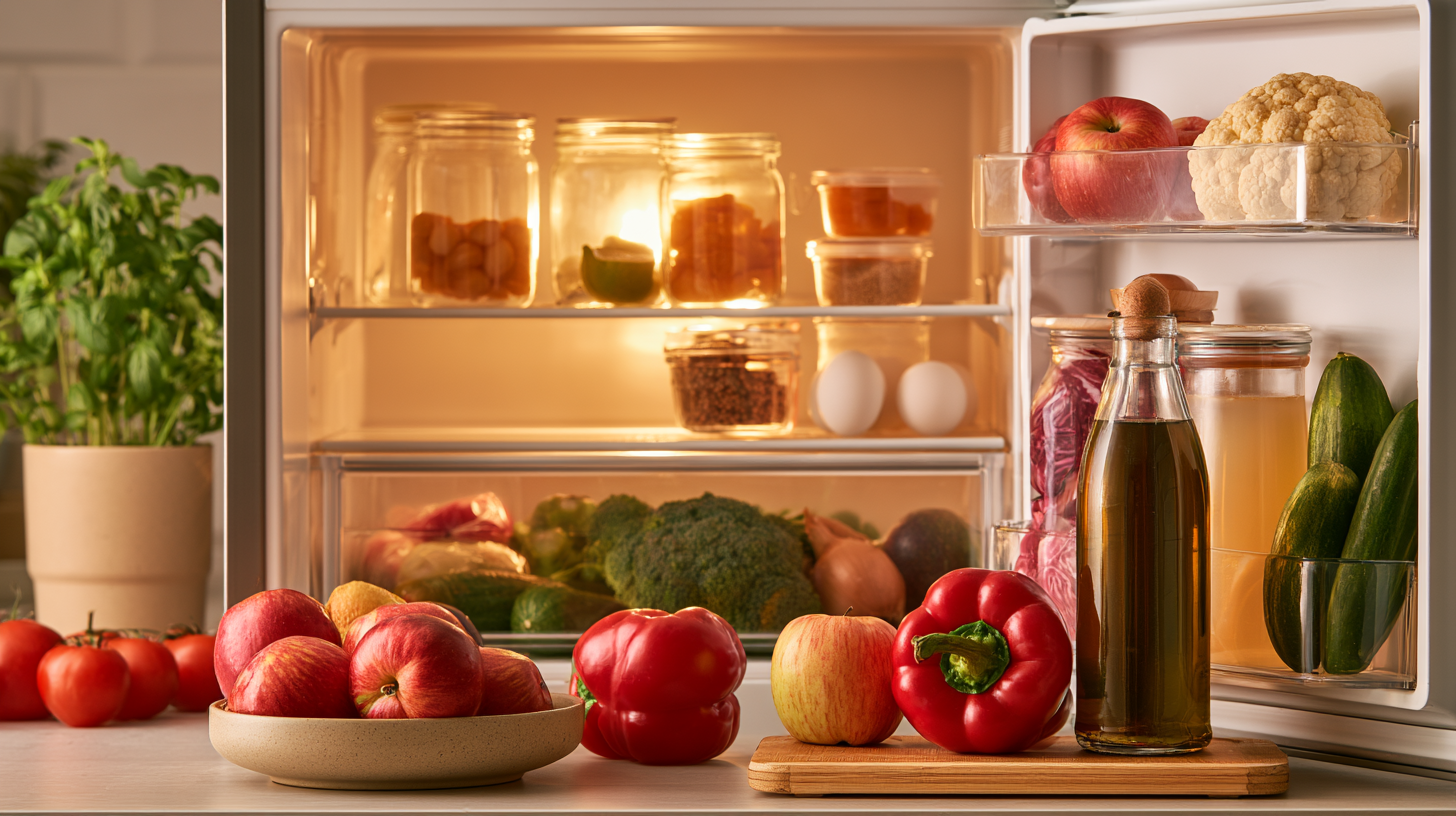
The Microplastic-Free Fridge. What to Swap First.
Introduction:
Most people think about the pantry when they think about kitchen plastic exposure. The fridge is just as important - and in some ways more so. Cold temperatures slow bacterial growth but they don't slow plastic leaching. Everything sitting in your fridge right now in plastic contact is being exposed continuously, meal after meal, day after day.
Here's where to start.
1. Food Storage Containers
This is the highest priority swap in the fridge. Leftover food stored in plastic containers is in direct, prolonged contact with plastic - often for days at a time. Fats and acids in food accelerate leaching significantly. A tupperware container of tomato-based pasta or anything oily is among the highest plastic exposure points in a typical kitchen.
Switch to glass containers with airtight lids. Glass is completely inert - nothing transfers into the food regardless of what's stored, how long it sits, or what temperature it's at. The investment is one-time and the containers last indefinitely.
Never microwave food in plastic containers - the combination of heat and plastic contact produces the highest leaching rates of any common kitchen scenario. If you're reheating leftovers, transfer to a ceramic or glass dish first.
2. Plastic-Wrapped Produce
Pre-wrapped produce arrives at the supermarket already in plastic contact - sometimes for days before you purchase it. The longer plastic touches food the more it leaches, and produce with high moisture content or thin skin absorbs contaminants more readily than dry goods.
Buy loose produce wherever possible. Farmers markets, bulk sections, and produce sections that allow loose selection are the cleanest options. When you do buy pre-wrapped produce, remove it from the packaging immediately when you get home and store in glass or a breathable natural alternative.
Beeswax wrap is an effective replacement for plastic wrap when you need to cover cut produce. It clings naturally, keeps food fresh, and introduces nothing synthetic into contact with your food.
3. Condiments
The fridge door is where most condiment bottles live - and most condiment bottles are plastic. Ketchup, mustard, hot sauce, salad dressing, soy sauce, vinegar - these are some of the most acidic liquids in your kitchen, and acidity is the primary accelerant of plastic leaching.
An acidic condiment sitting in a plastic bottle for weeks or months in your fridge door is one of the most consistent low-level plastic exposure points in a conventional kitchen - and one of the least thought about.
Switch to glass bottled versions of everything you use regularly. Most quality condiment brands sell in glass - the switch requires finding new brands in some cases but the options exist across every category. For items not available in glass, making your own in small batches stored in glass jars is often straightforward and significantly cheaper.
4. The Water Filter Pitcher
This one catches almost everyone off guard. Most people filter their tap water specifically to reduce contaminants - then store that filtered water in a plastic pitcher. The filter removes microplastics and chemical contaminants from the water and deposits it directly back into contact with plastic.
Switch to a glass pitcher for filtered water storage. Glass is inert - nothing leaches back into the water you just cleaned. Paired with a reverse osmosis filter this gives you genuinely clean water stored in a genuinely clean container.
Stainless steel water bottles and pitchers are a valid alternative if glass feels impractical - but confirm there is no plastic lining on the interior, which some metal containers have to prevent metallic taste.
5. Plastic Wrap
Plastic wrap is direct contact between plastic and food - often for days at a time across an entire surface area of whatever it's covering. It's one of the most intimate plastic-food contact points in the kitchen and one of the easiest to eliminate.
Switch to beeswax wrap for covering bowls, wrapping cut vegetables and fruit, and covering dishes. Beeswax wrap is reusable, biodegradable, clings effectively to most surfaces, and introduces nothing synthetic into contact with your food.
For anything that needs a proper seal, a glass container with a lid is always the cleaner option. The goal is eliminating any scenario where plastic film is in direct contact with your food for an extended period.
6. Dairy and Beverages
Milk, juice, and other beverages are often sold in plastic bottles or plastic-lined cartons. These liquids - particularly anything acidic like juice - absorb plastic chemicals from their containers over time.
Switch to glass-bottled milk and juice where available. Many quality dairy and beverage brands sell in glass, particularly at farmers markets and specialty retailers. For everyday shopping, choose cardboard cartons over plastic bottles as a lower-exposure intermediate option.
The Order That Makes Sense
Food storage containers first - they're in contact with your meals most directly and most frequently. Condiments second - easy swap, immediate impact. Water pitcher third - you've already filtered the water, don't undo it. Produce fourth - buying loose is a habit more than a purchase. Plastic wrap fifth - one beeswax wrap set replaces it entirely.
Work through them as existing items wear out or run empty. By the time you've made it through the list your fridge will be fundamentally different - and your daily plastic exposure through food will be a fraction of what it was.
That's the Purarium standard. Not all at once. In order of impact, compounding over time.