Ranked: Safest to Most Toxic Cookware
Introduction:
Most people never question what they cook with. The pan came with the kitchen, or it was cheap, or it had good reviews. But cookware is in direct contact with your food at high temperatures for the entirety of every meal you cook - and what it's made of matters more than most people realize.
Here's the full ranking from worst to best - and why the most popular option is at the bottom of the list.
Worst: Non-Stick (PTFE/Teflon)
The most common cookware in most kitchens is the most problematic. Non-stick coatings are made from PTFE - polytetrafluoroethylene - a synthetic fluoropolymer in the PFAS family, commonly known as forever chemicals.
At normal cooking temperatures PTFE begins to degrade. When scratched - which happens inevitably with any metal utensil or abrasive cleaning - the coating fragments and those fragments enter your food directly. At higher temperatures the coating releases toxic fumes documented to cause polymer fume fever in humans and kill pet birds within minutes of exposure.
The convenience of non-stick is real. The cost is also real. No coating lasts indefinitely - most non-stick pans need replacing every 2-3 years, at which point the degraded coating has been entering your food throughout that entire period.
This is the cookware to replace first.
Bad: Uncoated Aluminium
Aluminium is reactive - it leaches into food, particularly acidic foods like tomatoes, citrus, and vinegar-based dishes. Chronic low-level aluminium exposure has been studied in relation to neurological health and while the direct causal link remains debated, the precautionary case for avoiding it is straightforward.
Most non-stick pans are aluminium underneath the PTFE coating - meaning when the coating degrades you get both problems simultaneously. Uncoated aluminium baking sheets and pans are common in most kitchens and worth replacing progressively.
Acceptable: Ceramic Coated
Ceramic-coated cookware is marketed as the clean alternative to PTFE and for the most part the marketing is accurate - ceramic coatings are free from PTFE and PFAS and don't carry the same toxicity profile at high temperatures.
The problem is durability. Ceramic coatings degrade significantly within 1-2 years of regular use, losing their non-stick properties and potentially exposing the aluminium base underneath. It's a better short-term choice than PTFE but not a long-term solution.
If you're transitioning away from non-stick and not ready to commit to cast iron or stainless steel, ceramic is an acceptable intermediate step - but treat it as temporary.
Good: Stainless Steel
Stainless steel is inert at cooking temperatures - it doesn't react with food, doesn't leach chemicals, and doesn't degrade over time. A quality stainless steel pan maintained properly will last indefinitely.
The learning curve is heat management. Stainless steel requires preheating properly before adding fat, and understanding that food will initially stick before releasing naturally once it's ready to be turned. Once you understand the technique stainless steel performs as well as non-stick for most cooking applications.
Look for 18/10 stainless steel - the grade that contains 18% chromium and 10% nickel, which provides the most stable and inert surface. Avoid cheap stainless steel which may leach nickel into food at higher concentrations.
Stainless steel is the most versatile clean cookware option - oven safe, induction compatible, dishwasher safe, and essentially indestructible with proper care.
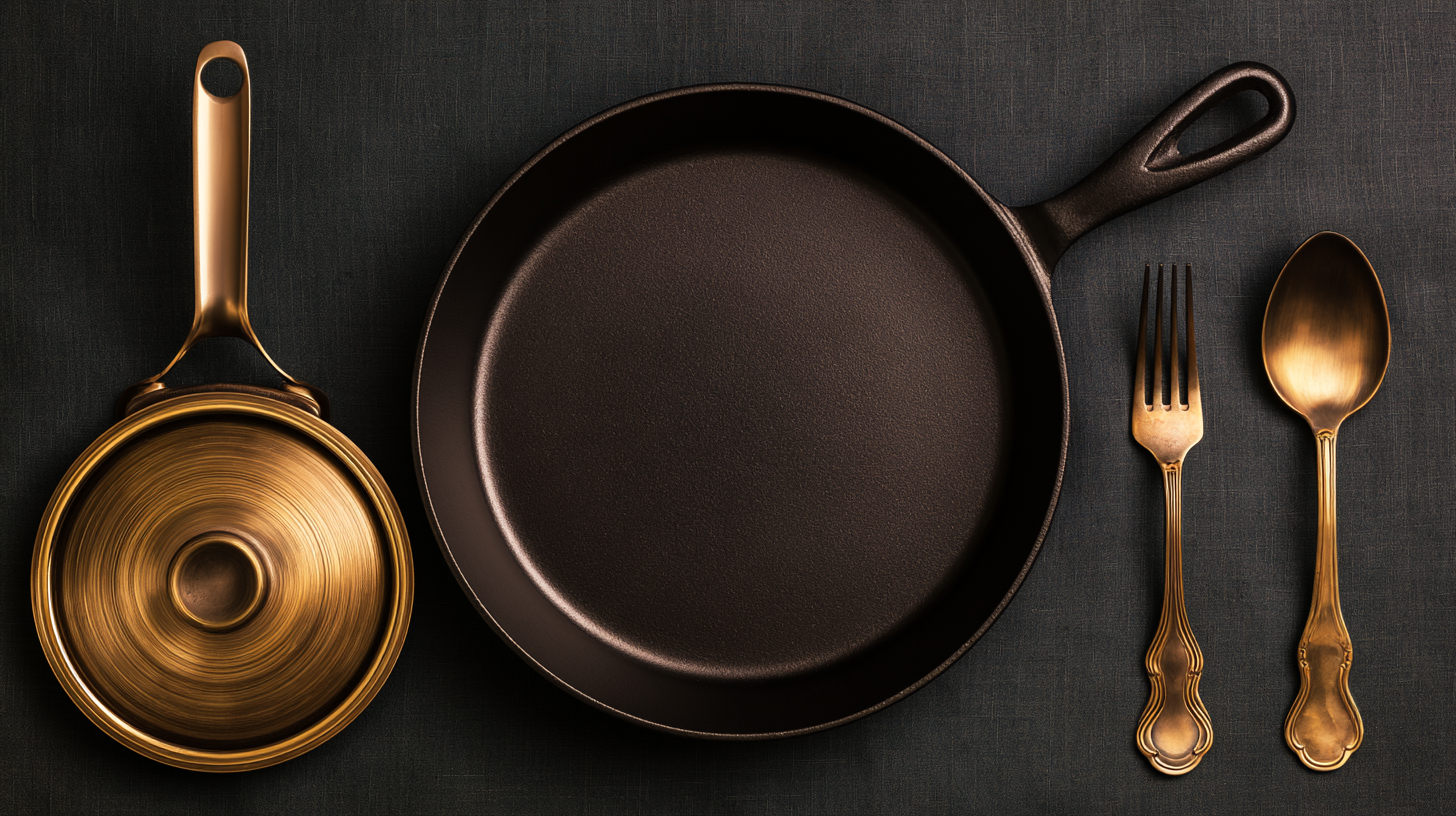
Best: Cast Iron and Carbon Steel
Cast iron and carbon steel are the gold standard - and they're the standard kitchens used for centuries before the plastics and chemical industry convinced everyone they needed a coating.
Both materials are completely inert when properly seasoned. The seasoning - a layer of polymerized oil baked into the surface - creates a natural non-stick surface that improves with every use and never degrades the way synthetic coatings do. There is nothing to leach, nothing to fragment, and nothing to replace.
Cast iron retains heat exceptionally well and is ideal for searing, baking, and anything requiring sustained high heat. Carbon steel heats and cools more responsively, making it better suited to techniques requiring quick temperature changes. Both are oven safe to any temperature, compatible with all heat sources including induction, and will last generations with basic maintenance.
The initial investment is higher than non-stick. The lifetime cost is lower. A well-maintained cast iron pan purchased today will still be in use in fifty years.
The Transition
You don't need to replace everything at once. Work through the ranking in order - retire the non-stick first, replace with stainless steel or cast iron as budget allows. By the time you've worked through your kitchen you'll have cookware that performs better, costs less over time, and puts nothing into your food.
That's the Purarium standard. Not the most convenient option - the right one.