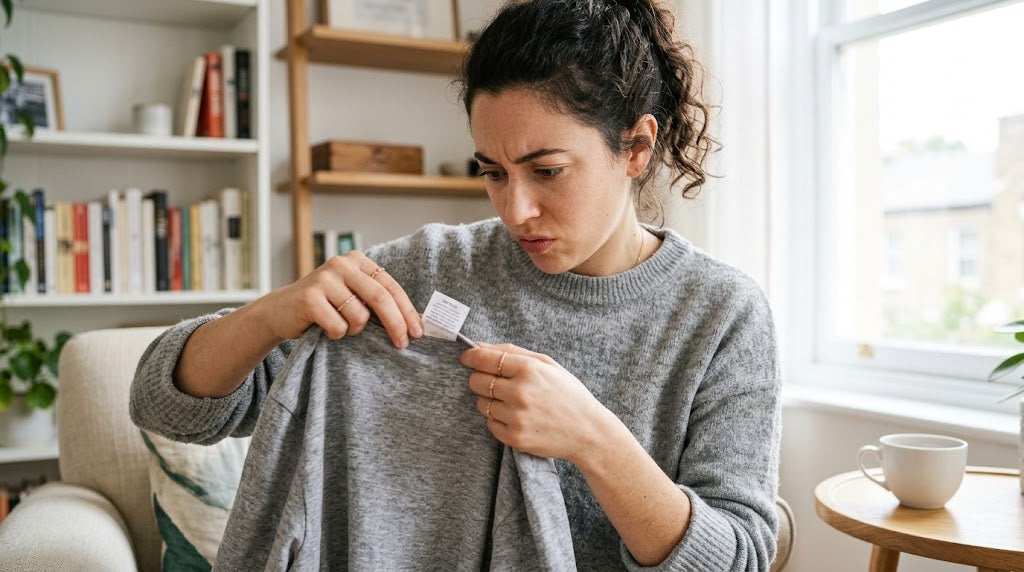
10 Amazon Clothing Swaps People Are Making Since Learning Laundry Is the #1 Source of Ocean Microplastics
There's a stat that's been making the rounds and stopping people mid-scroll: one load of synthetic laundry can shed anywhere from 700,000 to 12 million microfibers, and laundry is now considered the single largest household source of ocean microplastic - the equivalent of roughly 3 billion polyester shirts' worth of fiber released into the ocean every year. It's not just wash day, either. Synthetic clothing sheds while you wear it, especially fleece and acrylic, which shed at multiples of what a plain woven polyester does.
At the same time, a different trend has been quietly building: creators wearing a single merino wool t-shirt for a week - or, in one well-documented case, 100 days straight - and reporting it never smells. That's not a gimmick; it's just what wool fiber does that synthetic fiber can't. Between the microfiber wake-up call and the merino obsession, a lot of closets are shifting back toward natural fiber basics. Here are the 10 Amazon picks doing most of that heavy lifting right now.
1. Pact GOTS-Certified Organic Cotton T-Shirt

Pact built its entire brand around one thing: GOTS certification on basics, the shirts everyone owns a dozen of and washes weekly. That's the certification that actually verifies the cotton was grown without synthetic pesticides and processed without chlorine bleach or formaldehyde finishing - not just "organic" on a hangtag. It's become the default recommendation anywhere the "what's an actual clean basics brand" question comes up.
Trade-off: the jersey knit is firmer than a cotton-spandex blend since there's no synthetic stretch fiber - some people size up.
[CHECK PRICE ON AMAZON BY CLICKING HERE ->]
2. Icebreaker 100% Merino Base Layer

This is the brand behind a good chunk of the "I wore this for a week and it still doesn't smell" content making the rounds. The mechanism is real, not marketing: wool's fiber structure doesn't give odor-causing bacteria the damp environment they need the way synthetic fabric does. Look specifically for Icebreaker's 100% Merino line, not their blended styles, which cut the wool with cheaper synthetic fiber.
Trade-off: pricier than a synthetic base layer and needs cold-water washing, but you'll wash it far less often.
[CHECK PRICE ON AMAZON BY CLICKING HERE ->]
3. Organic Signatures GOTS Organic Cotton Denim

Regular denim is one of the more chemically intensive garments in a closet - the indigo dyeing process alone is a known heavy-metal and wastewater concern. Organic Signatures makes GOTS-certified denim from about 98% organic cotton with just a touch of elastane for stretch, clearly disclosed rather than buried in the fine print. It's the honest version of "organic jeans" in a category full of vague sustainability claims.
Trade-off: a small amount of stretch fiber for fit - true zero-stretch "raw" organic denim exists if that matters more to you than fit.
[CHECK PRICE ON AMAZON BY CLICKING HERE ->]
4. Pact Organic Cotton Underwear

Underwear sees the longest, closest skin contact of anything you own, which is exactly why this is one of the higher-leverage swaps on this list even though it doesn't get talked about as much as the t-shirt version. Same GOTS-certified supply chain as Pact's tees, applied to the category where it arguably matters most.
Trade-off: less synthetic "performance" stretch than an athletic-brand pair - most people keep a couple of synthetic pieces for workouts and default to organic cotton the rest of the time.
[CHECK PRICE ON AMAZON BY CLICKING HERE ->]
5. Darn Tough Merino Wool Socks

Darn Tough is transparent about something most sock brands aren't: their merino socks are majority wool (50-67% depending on the style) with the rest nylon and a touch of spandex, specifically at the heel and toe where an all-wool sock wears through fast. That kind of disclosed percentage, instead of hiding synthetic content behind the word "merino" on the label, is why this brand keeps showing up in "actually good hiking socks" roundups.
Trade-off: not 100% natural fiber, but the synthetic content is there for durability, not cost-cutting - a fair trade for a sock specifically.
[CHECK PRICE ON AMAZON BY CLICKING HERE ->]
6. Pendleton 100% Wool Coat

Most water-repellent outerwear gets that property from a PFAS-based chemical coating - the same "forever chemicals" family that's been in the news for turning up in blood and drinking water. Wool does something similar naturally, thanks to the lanolin still in the fiber, with zero applied treatment. Pendleton weaves its wool coats domestically and has for over a century, which is part of why the brand keeps coming up whenever "non-toxic winter coat" gets asked about.
Trade-off: dry clean only, and heavier than a technical synthetic-shell jacket - not built for a genuine downpour.
7. LilySilk 100% Mulberry Silk Pajamas

Sleepwear is worn for roughly a third of your life against skin that's warm and often lightly sweating - similar conditions to a base layer, but for hours longer and without the ability to adjust mid-wear. LilySilk's line is OEKO-TEX Standard 100 certified, meaning the finished silk (dye included) is independently tested clean, not just "silk" as a raw material claim.
Trade-off: hand-wash or delicate cycle only, and it costs more than cotton or synthetic sleepwear - the fabric feel is genuinely different, which is the whole point.
[CHECK PRICE ON AMAZON BY CLICKING HERE ->]
8. Unbound Merino Travel Clothing

This is the brand actually driving a lot of the merino travel content on TikTok right now - superfine merino under 17 microns, built specifically for the "one outfit, multiple days, never smells" use case that made the 100-day wool-shirt challenge go viral in the first place. It does the job synthetic travel and athletic wear does (wrinkle resistance, quick-dry, odor control) without a synthetic base needing a chemical finish to get there.
Trade-off: costs meaningfully more per piece than synthetic travel wear, and doesn't have the same stretch/compression synthetic athletic fabric offers for actual training.
[CHECK PRICE ON AMAZON BY CLICKING HERE ->]
9. Amazon Basics GOTS Organic Cotton Bath Towels

A towel is used against damp, warm, just-showered skin - one of the more absorptive conditions in a household - and a lot of budget towels are softened with synthetic coatings or blended with polyester to cut cost. This is a GOTS-certified organic cotton line manufactured in an OEKO-TEX STeP-certified facility, at a price that undercuts most "clean" towel brands by a wide margin, which is exactly why it keeps getting recommended as the easy first swap in this category.
Trade-off: doesn't have the synthetic-softener plushness of a budget towel straight out of the package - it softens with washing instead.
[CHECK PRICE ON AMAZON BY CLICKING HERE ->]
10. Guppyfriend Washing Bag

This is the direct answer to the microfiber stat that opened this list. You put synthetic clothing inside the bag before washing, and independent testing by the Fraunhofer Institute found it cuts fiber breakage and release by 86% on average. It won't replace the need to eventually own more natural fiber, but for whatever synthetic clothing is still in your closet - and almost everyone has some - it's the single most direct fix available right now.
Trade-off: the bag itself is a tough nylon-based material, deliberately so, since it needs to survive the wash without shedding itself. One legitimate exception to an otherwise natural-fiber list.
[CHECK AMAZON PRICING BY CLICKING HERE ->]
The Bottom Line
You don't need to replace a closet overnight. Start with what's worn longest and washed most - underwear, base layers, the shirt you reach for daily - since that's both the highest skin contact and the highest microfiber-shedding combination. Grab a Guppyfriend for whatever synthetic pieces are staying in rotation while the rest of the wardrobe transitions. The pattern across every pick here is the same: real certification, real disclosed materials, not just a green-sounding name on the tag.