The Non-Toxic Lunchbox. What to Use Instead of Plastic.
Introduction:
A packed lunch sits for hours before it's eaten. Whatever it's packed in has that entire time to transfer into the food - and for most people, that means plastic. The container, the wrap, the drink pouch, the individually wrapped snacks. A conventional lunchbox is one of the longest single-sitting plastic-food contact scenarios in a typical day.
The good news is it's also one of the easiest to fix. A handful of swaps replaces every plastic touchpoint, costs less over time, and works whether you're packing for yourself or for a child.
The Container
Start with the box itself. Plastic lunchboxes and bento containers are in contact with food for hours at a time, and the transfer accelerates with anything warm, oily, or acidic - which covers most of what ends up in a lunch. The plastic doesn't need to be hot to leach; prolonged contact alone is enough.
Switch to stainless steel. Stainless steel is completely inert - nothing transfers into food regardless of what's packed or how long it sits. It's effectively indestructible, doesn't retain odors or stains the way plastic does, and a quality stainless container will outlast years of daily use. Bento-style stainless boxes with compartments handle portioned meals the same way plastic ones do, without the exposure.
For anything that genuinely needs a leakproof seal, look for stainless containers with silicone-sealed lids - silicone is chemically stable and a reasonable exception where a seal is required.
The Wrap
Plastic wrap and zip-lock bags are direct, full-surface plastic contact with food for the entire time the lunch sits. Sandwiches, cut fruit, wraps - anything wrapped in plastic film is absorbing from it for hours.
Beeswax wrap is the direct replacement for sandwiches and produce. It molds around food with the warmth of your hands, holds its shape, and is reusable for months. For anything that needs more structure, a small stainless steel container does the job without any plastic contact.
Reusable cloth sandwich bags are another effective option - washable, durable, and completely free of plastic-food contact.
The Drink
Plastic drink bottles and juice pouches leach into their contents all day, and the problem is worse for acidic drinks like juice, which draw compounds out of plastic more aggressively than water.
Switch to a stainless steel or glass bottle. For children, insulated stainless steel is the practical choice - durable enough to survive being dropped, and it keeps drinks cold for hours without any plastic contact. Refilling a steel bottle with water or homemade drinks also eliminates the single-use pouch waste entirely and costs a fraction over time.
The Utensils
Disposable plastic cutlery sheds into food - especially warm food - and gets thrown away after a single use. It's both an exposure point and a waste stream.
A small reusable utensil set that lives in the lunchbox solves both. Stainless steel or bamboo utensils are inexpensive, durable, and put nothing synthetic in contact with warm food. Many are sold in compact cases designed specifically to travel in a bag or lunchbox.
The Snacks
Individually plastic-wrapped snacks are a constant, low-level exposure point - and one of the more expensive ways to buy food by unit. Each wrapper is plastic in direct contact with the food inside, often for weeks or months before it's eaten.
Buy snacks in bulk and portion them at home into small stainless steel containers, glass jars, or cloth snack bags. It cuts the packaging exposure, reduces waste dramatically, and costs significantly less per serving than individually wrapped equivalents. For a child's lunch, a set of small reusable containers covers a full week of snacks with no wrappers at all.
The Full Setup
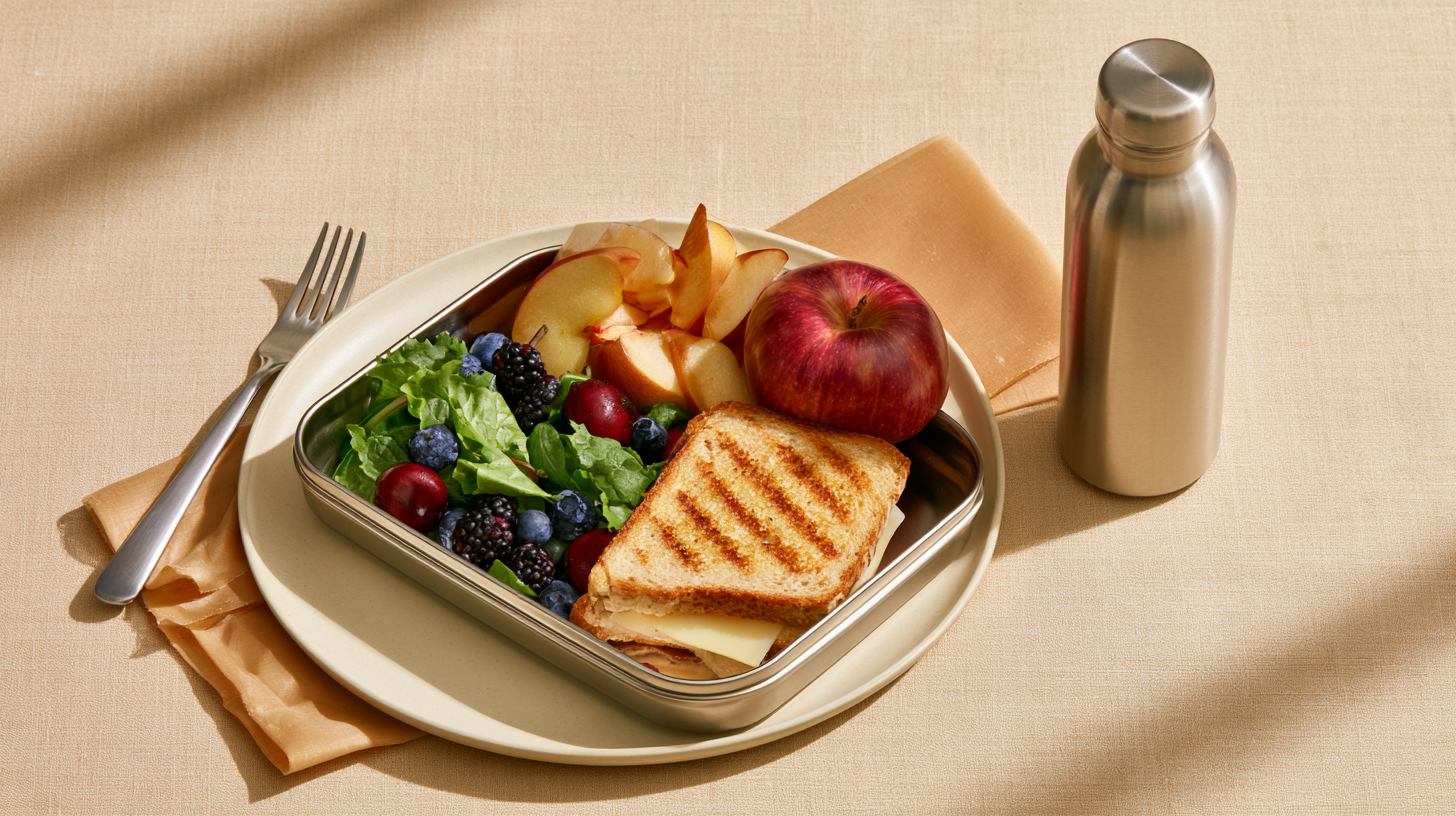
Assembled together, the non-toxic lunchbox is straightforward: a stainless steel container for the meal, beeswax wrap or cloth bags for anything wrapped, a stainless steel or glass bottle for the drink, a reusable utensil set, and snacks portioned into steel tins or cloth bags rather than bought individually wrapped.
The upfront cost is higher than a plastic lunchbox and a box of sandwich bags. The lifetime cost is lower - everything in the setup is reusable for years, and buying snacks in bulk rather than individually wrapped saves money every week. It's one of the rare cases where the cleaner choice is also the cheaper one over time.
For parents, it's worth noting that children are more vulnerable to microplastic and endocrine-disrupting chemical exposure than adults - their systems are still developing, and they take in more relative to body weight. The lunchbox is packed five days a week for years. Getting it right is one of the higher-leverage changes a parent can make.