Seafood Is One of the Highest Sources of Microplastic Exposure. Here's Why.
Introduction:
When most people think about reducing microplastic exposure they think about water bottles and food packaging. Seafood rarely comes up. It should be one of the first things on the list.
The ocean is saturated with plastic. An estimated 171 trillion plastic particles are currently circulating in the world's oceans - and every marine animal living in that water is ingesting them. By the time seafood reaches your plate, it has already accumulated the plastic from the environment it lived in.
The Ocean Is Saturated
Plastic breaks down in the ocean but it doesn't disappear. UV radiation, wave action, and physical degradation break larger pieces into smaller and smaller fragments - microplastics and eventually nanoplastics that disperse throughout the water column. They exist at every depth, in every ocean, in every region tested.
Marine animals at every level of the food chain are exposed. Phytoplankton ingest nanoplastics. Small fish eat the plankton. Larger fish eat the smaller fish. The plastic moves up the chain - and concentrates as it goes.
Fish
Microplastics have been found in the digestive tracts, muscle tissue, and organs of fish species consumed globally. The concentration varies by species, habitat, and proximity to areas of high plastic pollution - but no region or species has been found to be entirely free of contamination.
When you eat whole fish, or fish that wasn't cleaned thoroughly, you're consuming the contents of its digestive system along with its muscle tissue. For fish that feed near the surface or in coastal waters - where plastic concentration is highest - the exposure is significant.
Shellfish
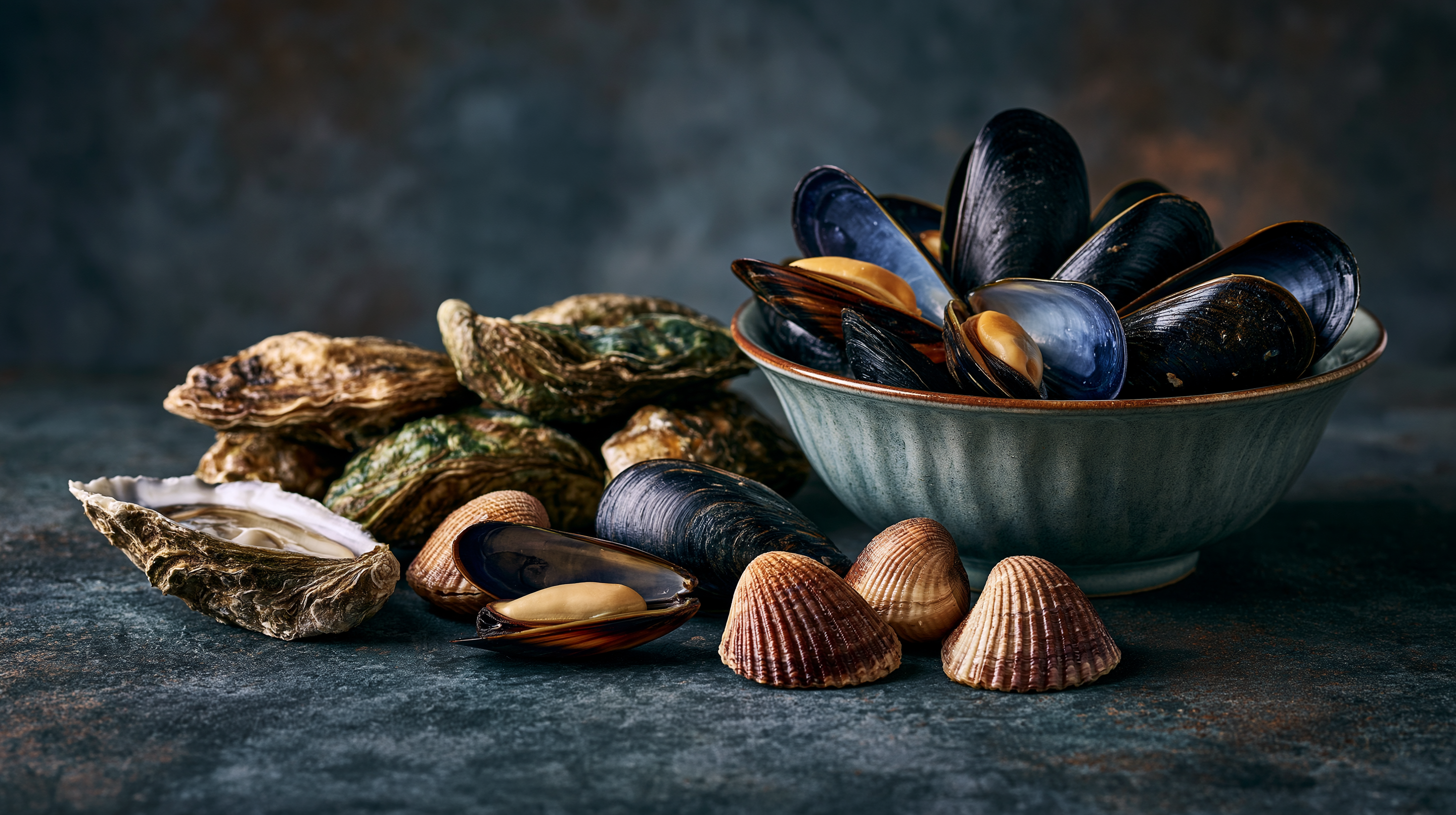
Shellfish are filter feeders. Oysters, mussels, clams, and scallops process hundreds of liters of seawater daily, filtering out plankton and organic matter to eat. Whatever else is in that water - microplastics, chemical contaminants, heavy metals - gets filtered out and concentrated in their tissue too.
Unlike fish, you eat shellfish whole. There's no fillet, no muscle tissue separated from the digestive system. You consume the entire animal - including everything it accumulated filtering the water it lived in.
Studies consistently show shellfish have among the highest microplastic concentrations of any seafood. A single serving of mussels can contain hundreds of microplastic particles.
Sea Salt
The contamination doesn't stop at the seafood itself. Sea salt is harvested from seawater and microplastics have been found in sea salt samples from every region of the world tested - Europe, Asia, North America, and beyond.
It's one of the most overlooked exposure points in a conventional kitchen. An ingredient used in virtually every meal, sourced directly from the most plastic-contaminated body of water on the planet.
The straightforward swap is Himalayan pink salt or other rock salts - harvested from ancient geological deposits formed long before plastic existed. Zero microplastic contamination by definition.
The Accumulation Problem
Small fish and shellfish have short lifespans and rapid harvest cycles. Unlike larger marine mammals that have years to process and partially excrete what they ingest, small seafood animals are harvested before they have meaningful opportunity to clear what they've accumulated. The plastic in the water at the time of harvest is effectively the plastic in your meal.
This is why smaller, shorter-lived seafood tends to carry higher microplastic concentrations than larger, longer-lived fish - counterintuitive given the bioaccumulation logic, but consistent with what the research shows.
What You Can Do
Eliminating seafood isn't the answer - the nutritional value is significant and the exposure from other sources is just as real. The goal is informed reduction.
Prioritize larger fish with shorter coastal exposure over shellfish where possible. Source from certified clean water fisheries when available. Switch from sea salt to Himalayan or rock salt immediately - it's an easy, permanent swap with zero downside.
And apply the same logic you apply everywhere else: understand where your exposure is coming from, reduce it at the highest impact points first, and make changes that compound over time.